The Role of AI in Accessibility Testing
Artificial intelligence is increasingly being used to detect accessibility issues in websites as a method of obtaining comprehensive reports. Could AI provide a complete audit report?
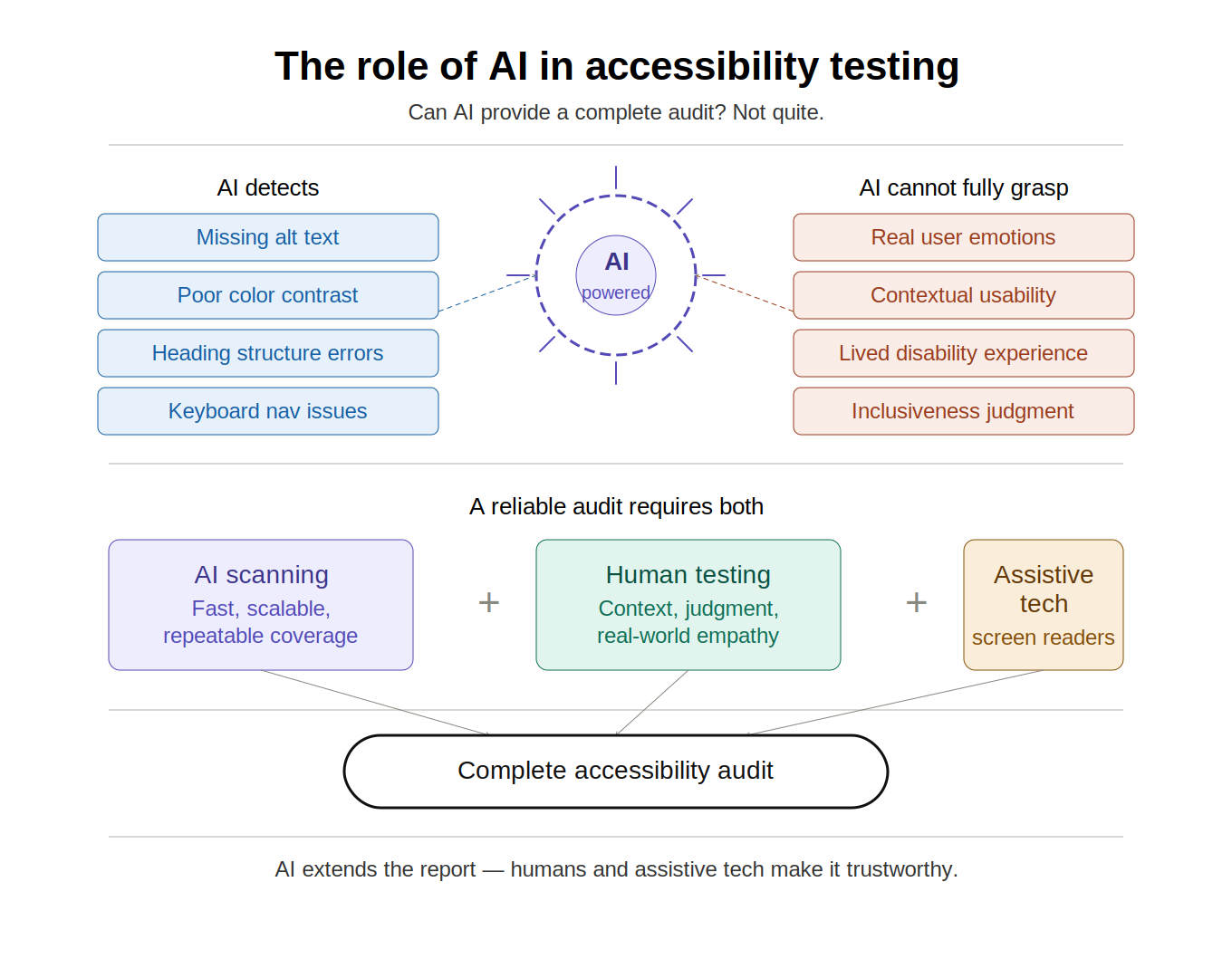
One major advantage of AI is automated issue detection. AI-powered tools can scan interfaces to identify problems such as missing alt text, poor color contrast, incorrect heading structures, or keyboard navigation issues. Some systems can even analyze user behavior to predict where people with disabilities may struggle.
However, AI is not a complete replacement for human testing. Accessibility often depends on real user experiences, emotions, and context that AI cannot fully understand. Human testers and an additional testing made by people with disabilities, remain essential for evaluating usability and inclusiveness.
Another key limitation of AI in accessibility testing is its difficulty handling dynamic content and complex user interactions. Modern websites often include elements such as modals, carousels, live chat widgets, and single-page application flows that change based on user input. AI tools may struggle to thoroughly evaluate these interactions, particularly when assistive technologies like screen readers or switch controls are involved.
In conclusion, AI could provide some extended reports of accessibility issues in a website, but a reliable and correct audit can’t be realised without a proper manual testing and a thorough check using assistive technologies like screen readers.