Your Site Passes. It's Still Broken
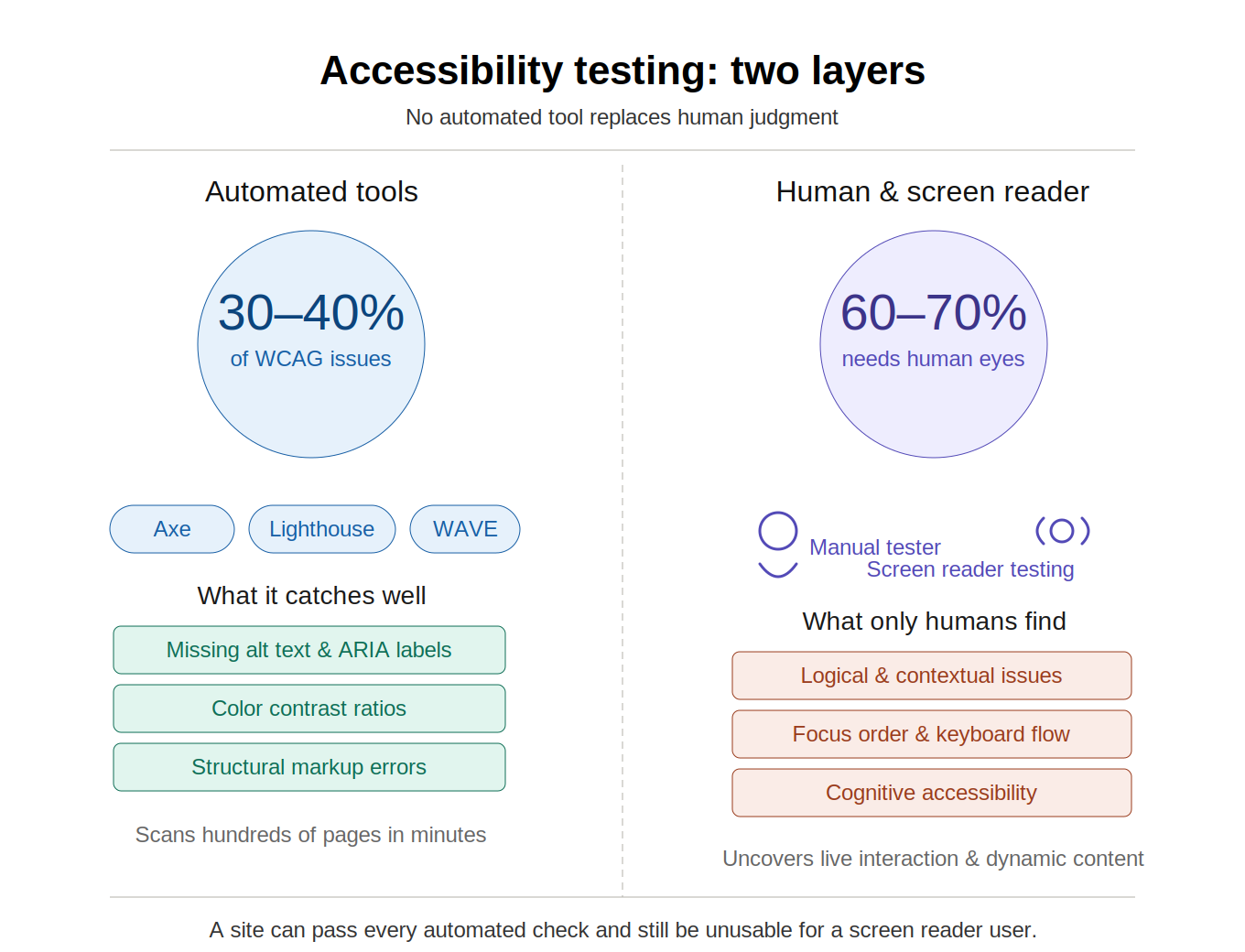
Automated tools can only catch approximately 30-40% of WCAG issues. The rest require human judgment, contextual understanding, and lived experience of disability. A site can pass every automated check and still be completely unusable for a screen reader user — which is exactly what some of the issues you found today demonstrate
The advantage of automatic tools like Axe, Lighthouse, WAVE, and Deque's browser extensions can scan hundreds of pages in minutes and catch reliable issues. Automated tools excel here because there's no ambiguity.
However, there are some important accessibility issues and errors that are not find or brought into attention by automatic tool.
Logical and contextual issues, focus order and keyboard interaction, premature or miscontextualised error messages, meaningful sequence in context, Cognitive accessibility are the most important issues which can only be found through manual testing.
Screen reader testing is also necessary and mandatory. This requires human input and cannot be replicated by automation — it uncovers issues in live interaction, dynamic content, custom components, and reading flow that no automated tool will flag.
Real users with disabilities will surface barriers that no tool, human tester, or heuristic review can fully anticipate on its own. Accessibility audits should be treated as a continuous practice embedded in the development cycle, not a one-time gate before launch. When teams accept that passing an automated report is only the beginning, they shift from compliance thinking to genuine usability.